

Privacy by Default
Definition
Privacy by default means ensuring that systems, products, and processes are configured to protect personal data by default under the DPDP framework.
Under the DPDP Act, privacy by default refers to the practice of designing systems, processes, and services in a way that automatically applies appropriate privacy protections without requiring individuals to manually enable them.
For organizations processing personal data, privacy by default means limiting data collection, access, sharing, and retention to what is necessary for the stated purpose. It encourages Data Fiduciaries to build privacy considerations into operational processes so that individuals receive stronger protection from the beginning of a data processing activity.
The DPDP Act does not specifically define or require the term “privacy by default.” However, adopting privacy-by-default practices supports key obligations under the Act, including purpose limitation, data minimisation, security safeguards, and responsible processing of personal data.
Examples of privacy-by-default practices include limiting default data collection fields, restricting unnecessary access permissions, setting appropriate retention periods, and ensuring privacy-friendly configurations in applications and platforms.
In practice, gaps emerge when:
- Applications collect more personal data than required by default.
- Users must manually change settings to improve privacy protection.
- Access permissions are broader than necessary.
- Default retention settings result in unnecessary data storage.
- Privacy considerations are introduced only after systems are built.
Organizations address these challenges by embedding privacy controls into product design, reviewing default configurations, applying access restrictions, minimizing data collection, and establishing governance processes. Within Privy, capabilities such as consent management, data discovery, privacy workflows, and compliance reporting help organizations operationalize privacy practices.
Questions About Staying in Control?
Here’s everything you need to know about this term and how it fits into your compliance program.
Privacy by default means configuring systems and processes to provide appropriate personal data protection automatically without requiring additional action from individuals.
The DPDP Act does not specifically use the term privacy by default, but organizations can adopt such practices to support responsible personal data processing.
Privacy by design focuses on incorporating privacy throughout the development lifecycle, while privacy by default focuses on ensuring privacy-protective settings are applied automatically.
Examples include limiting unnecessary data collection, restricting access, applying retention limits, and enabling privacy-friendly settings by default.
Privy helps organizations manage consent, understand personal data flows, apply governance workflows, and maintain visibility into privacy practices.
Still have a question?
Latest Blog

Sep 30, 2026
RBI NBFC Rules Just Banned Dark Patterns and Fake Consent
Sep 29, 2026
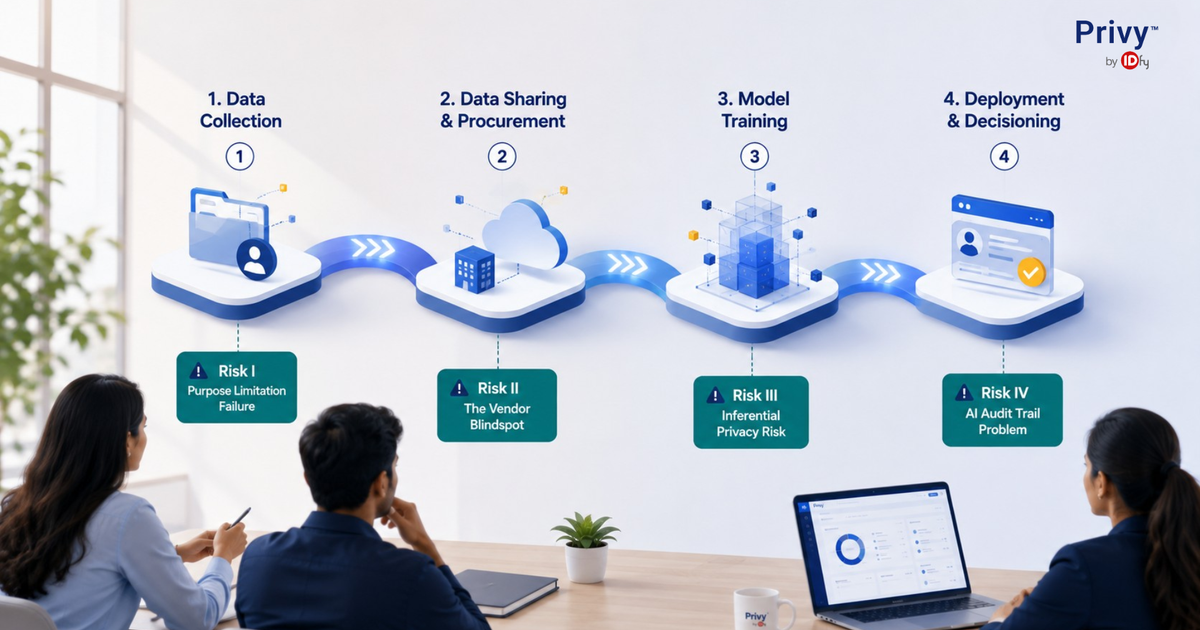
Data Privacy in the AI Era: The Four Risks Indian Corporations Have Already Inherited
Sep 10, 2026




 shivani@idfy.com
 Unit no. 801, Skyline Icon, 804, Andheri - Kurla Rd, Chimatpada, Marol, Andheri East, Mumbai, Maharashtra 400059
 1800 123 4339