

Purpose Limitation
Definition
Purpose limitation means collecting and processing personal data only for specific, clear, and lawful purposes under the DPDP Act.
Under the DPDP Act, purpose limitation refers to the practice of ensuring that a Data Fiduciary collects and processes personal data only for the purpose that has been communicated to the Data Principal or is otherwise permitted under the Act.
Purpose limitation helps prevent organizations from using personal data beyond the reason for which it was originally collected. It requires organizations to define processing purposes clearly, maintain transparency with Data Principals, and ensure that personal data usage remains aligned with those purposes.
For example, if an organization collects personal data to provide a specific service, using that data for unrelated activities without an appropriate basis may create compliance risks. Maintaining purpose limitation helps organizations reduce unnecessary processing, improve accountability, and support responsible data governance.
The DPDP Act does not use purpose limitation as a standalone principle in the same way as some global privacy laws, but requirements related to lawful processing, notice, consent, and responsible use of personal data support the need for purpose-based processing.
In practice, gaps emerge when:
- Personal data is reused for purposes not communicated to Data Principals.
- Organizations collect data without defining clear processing objectives.
- Different teams use the same personal data for unrelated activities.
- Data inventories do not capture processing purposes.
- Business changes introduce new uses of personal data without privacy review.
Organizations address these challenges by documenting processing purposes, maintaining data inventories, mapping data flows, reviewing new processing activities, and aligning consent and privacy notices with actual data usage. Within Privy, capabilities such as data discovery, data mapping, consent management, privacy workflows, and compliance reporting help organizations maintain visibility into personal data processing.
Questions About Staying in Control?
Here’s everything you need to know about this term and how it fits into your compliance program.
Purpose limitation means processing personal data only for specific and lawful purposes communicated to the Data Principal or permitted under the DPDP Act.
It helps prevent misuse of personal data and ensures organizations process information responsibly.
Consent should be obtained for clearly communicated purposes, allowing Data Principals to understand how their personal data will be used.
Organizations must ensure that additional processing is permitted under the DPDP Act and that transparency obligations are met.
Privy helps organizations understand personal data usage through discovery, mapping, consent workflows, and privacy governance capabilities.
Still have a question?
Latest Blog

Sep 30, 2026
RBI NBFC Rules Just Banned Dark Patterns and Fake Consent
Sep 29, 2026
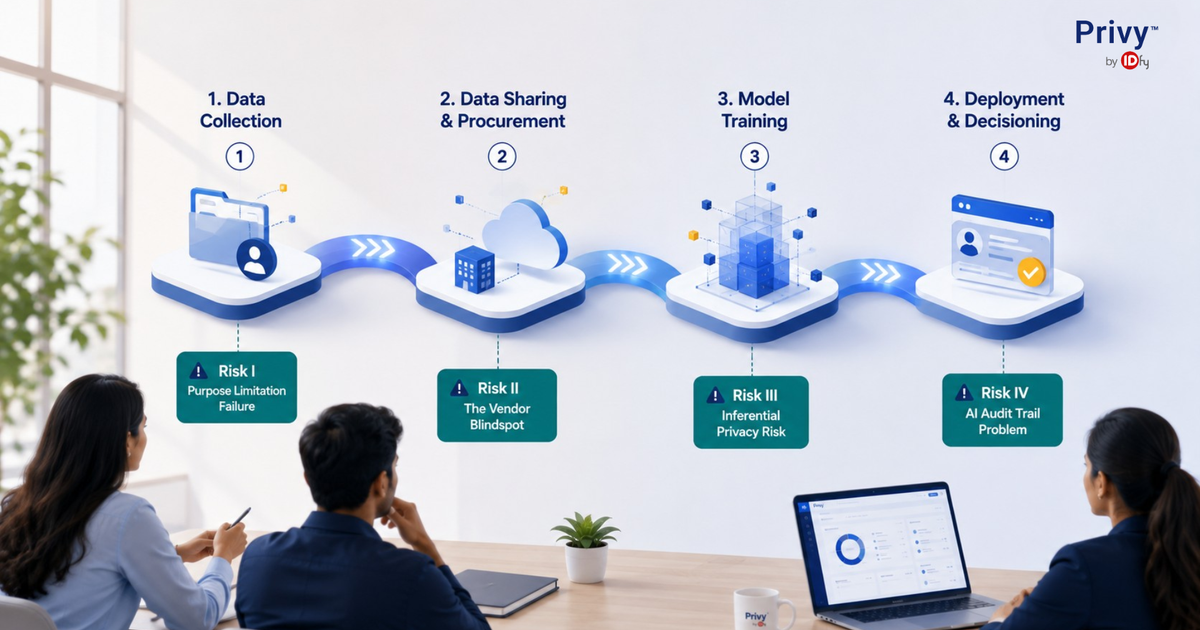
Data Privacy in the AI Era: The Four Risks Indian Corporations Have Already Inherited
Sep 10, 2026




 shivani@idfy.com
 Unit no. 801, Skyline Icon, 804, Andheri - Kurla Rd, Chimatpada, Marol, Andheri East, Mumbai, Maharashtra 400059
 1800 123 4339