

Transparent Data Practices
Definition
Transparent data practices involve clearly communicating how personal data is collected, used, stored, and processed to enable informed decisions by Data Principals under the DPDP Act.
Under the DPDP Act, transparent data practices refer to the approach of providing clear and accessible information to Data Principals about how their personal data is processed by Data Fiduciaries.
Transparency is supported through requirements such as providing notices, communicating processing purposes, enabling consent choices, and allowing Data Principals to exercise their rights. Organizations must ensure that individuals understand what personal data is being collected, why it is being processed, and how they can manage their privacy preferences.
Transparent data practices help organizations build accountability and trust by reducing uncertainty around personal data usage. They require alignment between privacy notices, consent mechanisms, internal processing activities, and actual data practices.
In practice, gaps emerge when:
- Privacy notices are unclear or difficult to understand.
- Data processing purposes are not communicated properly.
- Consent choices do not reflect actual data usage.
- Personal data practices differ across channels.
- Data Principals cannot easily exercise their rights.
Organizations address these challenges by creating clear notices, maintaining accurate consent workflows, documenting processing activities, and establishing Data Principal rights processes. Within Privy, capabilities such as consent management, privacy notice management, preference tracking, and compliance workflows help organizations improve transparency in personal data processing.
Questions About Staying in Control?
Here’s everything you need to know about this term and how it fits into your compliance program.
Transparent data practices involve clearly communicating personal data processing activities and enabling Data Principals to understand and manage their privacy choices.
It helps Data Principals make informed decisions and enables organizations to demonstrate accountability.
Organizations can improve transparency through clear notices, meaningful consent mechanisms, accurate processing information, and accessible rights workflows.
Consent processes should clearly explain the purpose of processing and provide Data Principals with meaningful choices.
Privy helps organizations manage consent, privacy notices, preferences, and Data Principal interactions through structured privacy workflows.
Still have a question?
Latest Blog

Sep 30, 2026
RBI NBFC Rules Just Banned Dark Patterns and Fake Consent
Sep 29, 2026
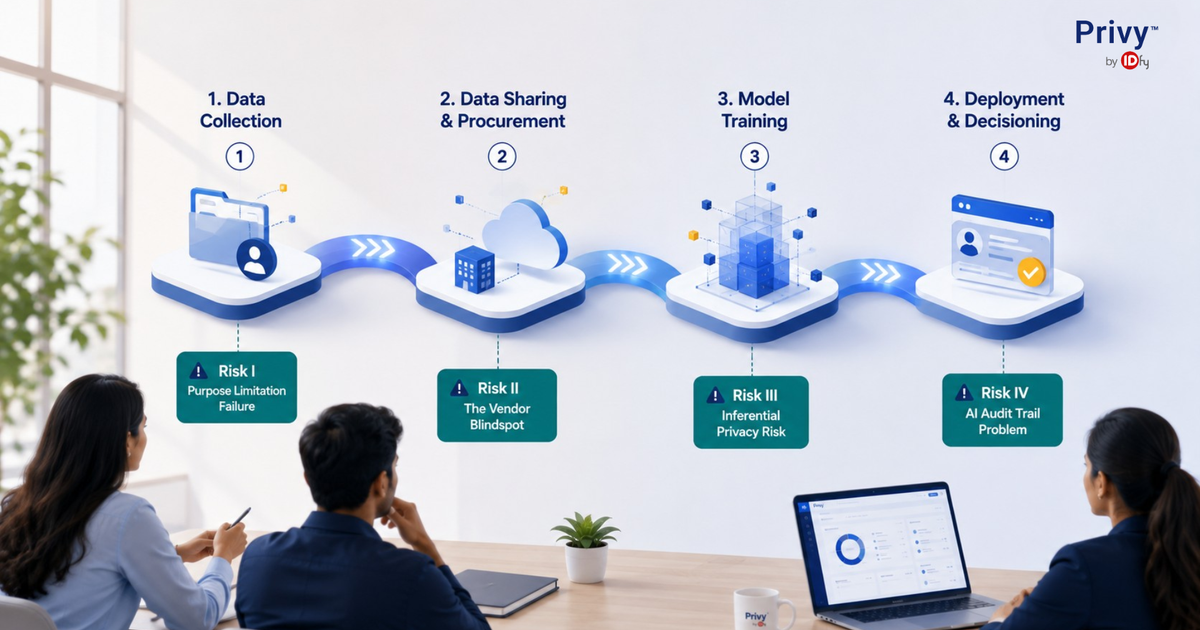
Data Privacy in the AI Era: The Four Risks Indian Corporations Have Already Inherited
Sep 10, 2026




 shivani@idfy.com
 Unit no. 801, Skyline Icon, 804, Andheri - Kurla Rd, Chimatpada, Marol, Andheri East, Mumbai, Maharashtra 400059
 1800 123 4339