

Verifiable Parental Consent
Definition
Verifiable Parental Consent refers to a mechanism for obtaining and confirming consent from a parent or lawful guardian before processing a child’s personal data under the DPDP Act.
Under the DPDP Act, organizations must obtain verifiable consent from a parent or lawful guardian before processing the personal data of a child.
Since children may not have the legal capacity to provide consent independently, Data Fiduciaries processing children’s personal data must implement mechanisms to verify that consent is provided by the appropriate parent or guardian.
Verifiable parental consent helps organizations ensure that consent is genuine, informed, and linked to an authorized individual. Organizations need appropriate processes to verify parental identity, maintain consent records, and manage children’s data responsibly.
The DPDP framework places additional obligations on organizations processing children’s personal data, including requirements related to obtaining parental consent and implementing appropriate safeguards.
In Practice, Gaps Emerge When:
- Organizations collect children’s data without verifying parental consent.
- Parent or guardian identity verification processes are weak.
- Consent records are incomplete or difficult to audit.
- Organizations cannot distinguish child users from adult users.
- Parental consent preferences are not properly managed.
Organizations address these challenges by implementing age verification mechanisms, identity verification workflows, consent management systems, and audit trails. Within Privy, capabilities such as consent lifecycle management, identity verification workflows, and compliance tracking help organizations manage consent requirements effectively.
Questions About Staying in Control?
Here’s everything you need to know about this term and how it fits into your compliance program.
Verifiable parental consent is a process to confirm that consent for processing a child’s personal data is provided by a parent or lawful guardian.
Children may not have the ability to provide legally valid consent, so organizations must obtain consent from a parent or guardian.
Data Fiduciaries processing children’s personal data are required to obtain verifiable parental consent.
Organizations may use appropriate identity verification and consent management mechanisms to confirm parental authorization.
Privy helps organizations manage consent workflows, verification processes, and compliance records related to personal data processing.
Still have a question?
Latest Blog

Sep 30, 2026
RBI NBFC Rules Just Banned Dark Patterns and Fake Consent
Sep 29, 2026
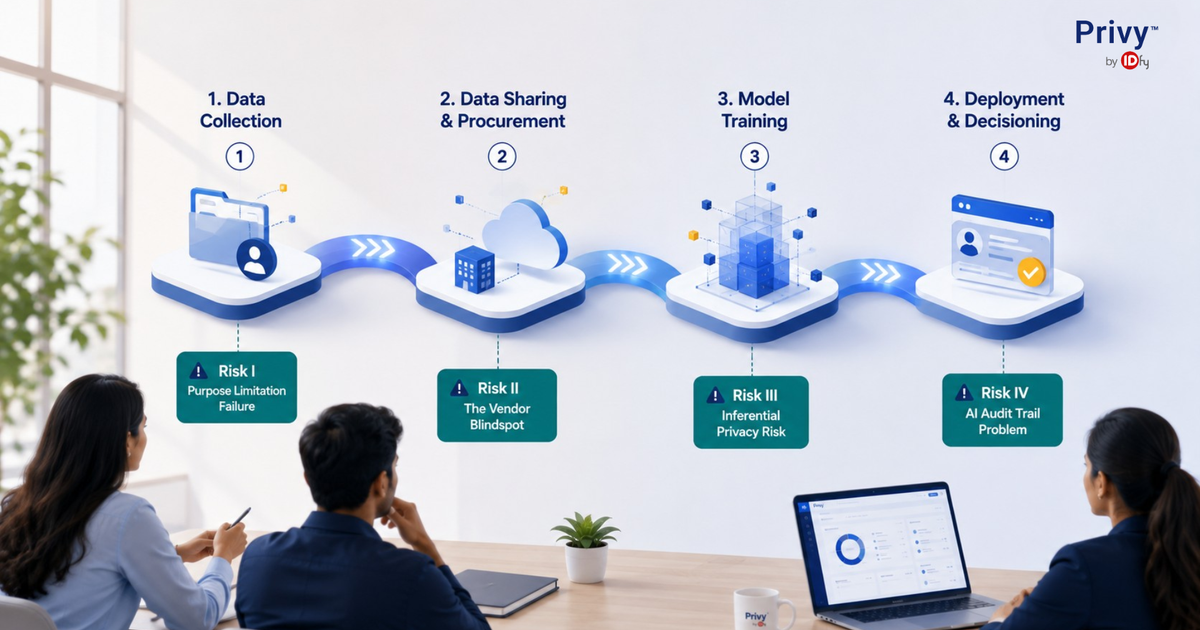
Data Privacy in the AI Era: The Four Risks Indian Corporations Have Already Inherited
Sep 10, 2026




 shivani@idfy.com
 Unit no. 801, Skyline Icon, 804, Andheri - Kurla Rd, Chimatpada, Marol, Andheri East, Mumbai, Maharashtra 400059
 1800 123 4339